

Do Retaining Walls in Minneapolis Need Repair or Replacement?
Most property owners see retaining walls as permanent fixtures. Built once, forgotten forever. But Minneapolis weather doesn't care what you assumed when you installed it. Freeze-thaw cycles hit hard here, and every winter leaves a mark. Walls that looked solid five years ago can be leaning, cracking, or draining poorly without you noticing—until the damage becomes expensive.
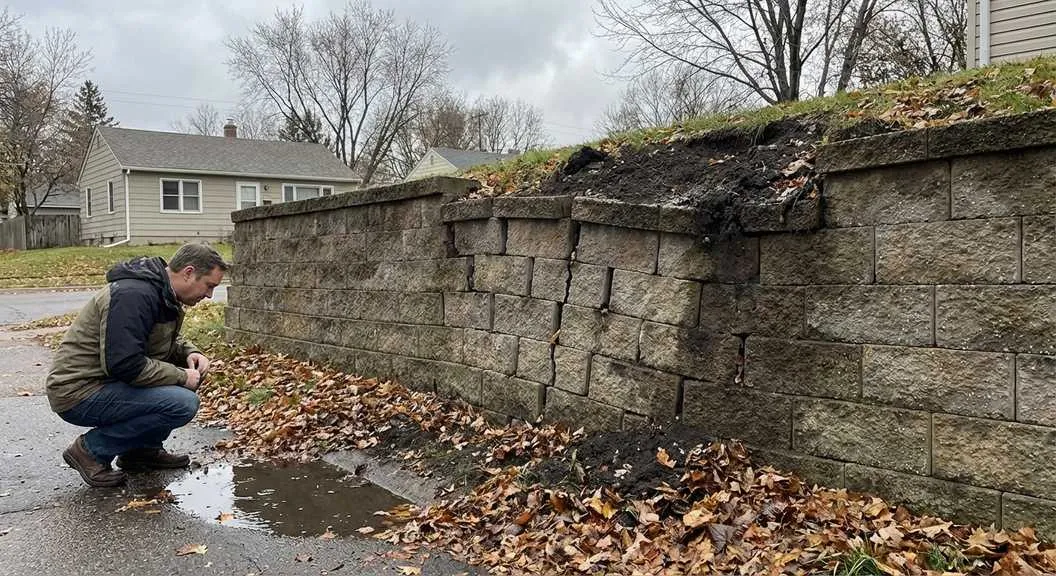
So here's what matters. If your wall is holding back soil and managing water the way it should, great. Just don't ignore the warning signs. Every crack tells a story. Every bulge means pressure is winning. And every repair decision should be based on what's actually failing—not just what looks bad from the driveway.
What These Structures Actually Do
Retaining walls exist to fight gravity. They hold soil in place on slopes, prevent erosion, and create level ground where there wasn't any. In Minneapolis, they also deal with moisture—lots of it. Rain, snowmelt, and groundwater all push against the wall from behind. When drainage fails or materials weaken, that pressure starts to win.
Different materials handle stress differently. Concrete block, natural stone, timber, poured concrete—they all have strengths and limits. But in this climate, the real enemy isn't the material. It's water. When moisture seeps in and freezes, it expands. When it thaws, it shifts. That cycle repeats every winter, and over time, even well-built walls start to show it.
The Red Flags You Shouldn't Ignore
We inspect walls after winter for a reason. That's when the damage shows up. Some signs are obvious. Others take a closer look. Either way, catching them early makes the difference between a repair and a rebuild.
Here's what to watch for:
- Cracks that run vertically or horizontally through blocks or mortar—especially if they're widening
- Walls that lean forward or bulge outward, even slightly
- Water pooling behind the wall or at the base after rain
- Soil washing out from underneath or between stones
- Blocks or stones that have shifted, loosened, or fallen out entirely
- Rotting wood or insect damage if the wall is timber-based
When Fixing It Makes Sense
Not every crack means you need a new wall. Some issues are surface-level. A few loose stones, minor settling, or a clogged drainage pipe—those are fixable. But if the wall is tilting, sinking, or showing structural failure across multiple sections, patching it won't solve the problem.
Age plays a role too. Walls built decades ago may not have proper drainage or reinforcement. Materials degrade. Standards change. If your wall is nearing the end of its expected lifespan and showing multiple issues, replacement might be the smarter move—even if repair seems cheaper upfront.
When Replacement Is the Only Real Option
Some walls are past saving. If the foundation has shifted, the structure is leaning more than a few degrees, or the materials have deteriorated beyond repair, rebuilding is the only way to restore safety and function. Timber walls, in particular, have shorter lifespans and often need replacement sooner than natural stone walls or concrete.
Cost matters, but so does longevity. If repairs are going to run 60% or more of what a new wall would cost, and the underlying issues aren't addressed, you're just delaying the inevitable. A new wall built with proper drainage, modern materials, and updated engineering will outlast a patched-up version every time.
What Causes Walls to Fail in the First Place
Most retaining wall failures come down to a few common culprits. Poor drainage is the biggest one. If water can't escape from behind the wall, it builds up pressure and saturates the soil. That leads to shifting, cracking, and eventual collapse.
Other causes include:
- Inadequate foundation depth or compaction during installation
- Soil movement or erosion that undermines the base
- Freeze-thaw cycles that crack and shift materials over time
- Overloading the wall with too much soil or weight from above
- Tree roots growing into or behind the wall, causing displacement
Why Professional Assessment Beats Guesswork
We've seen too many DIY repairs that made things worse. A homeowner patches a crack without addressing drainage. The crack comes back. Or they add more soil behind a leaning wall, thinking it will stabilize it. It doesn't—it accelerates the failure.
A contractor who knows Minneapolis soil and climate can spot what's really going on. They'll check the foundation, test drainage, measure the lean, and tell you whether the wall can be saved or needs to go. They'll also make sure any work meets local codes, which matters if you ever sell the property or file an insurance claim.
How to Keep a Wall Standing Longer
Once your wall is repaired or replaced, maintenance isn't optional. It's the difference between a wall that lasts 20 years and one that lasts 50. Most of it comes down to managing water and catching small problems before they grow.
Here's what works:
- Install or maintain drainage systems behind the wall—weep holes, gravel backfill, or perforated pipe
- Inspect the wall twice a year, especially after spring thaw and heavy storms
- Clear vegetation and roots that can trap moisture or push against the structure
- Fix minor cracks or loose stones as soon as you notice them
- Keep gutters and downspouts directed away from the wall to reduce water flow
Documentation Protects You Later
If you're dealing with a failing wall, take photos. Measure the lean. Note when cracks appeared or worsened. If you're filing an insurance claim or disputing a contractor's work, that documentation matters. It also helps the next contractor understand what's been tried and what hasn't.
Keep records of any repairs, including invoices, materials used, and dates. If the wall fails again, you'll have a timeline that shows whether the issue is recurring or new. That's valuable information when deciding whether to repair again or move to replacement.
The Real Cost of Waiting
Ignoring a damaged retaining wall doesn't make it go away. It makes it worse. A small crack becomes a structural failure. A slight lean becomes a collapse. And when a wall fails completely, you're not just paying for a new wall—you're paying for soil remediation, landscape repair, and possibly damage to structures or utilities nearby.
We help property owners in Minneapolis make smart decisions about retaining walls—whether that means targeted repairs, full replacement, or preventative upgrades. Our team specializes in both segmental retaining walls and boulder retaining walls for residential properties, as well as commercial segmental retaining walls and big block boulder retaining walls for larger projects. The goal isn't just to fix what's broken. It's to build something that holds up against the next ten winters, not just the next one.
Let’s Build a Wall That Lasts
We know how important it is to have a retaining wall that stands strong through every Minneapolis season. If you’re seeing signs of trouble or just want peace of mind, let’s talk about the best way forward for your property. Give us a call at 651-415-1000 or schedule a consultation and together we’ll make sure your wall is ready for whatever comes next.
‹ Back
Recent Posts
-

Thinking About Adding a Firepit for Outdoor Evenings?
September 7, 2026
-

Should You Add Landscape Lighting in Minneapolis This Spring?
August 24, 2026
-
Is Your Shoreview Walkway Ready for an Upgrade?
August 10, 2026
-
-

Is Your Roseville Pool Area Ready for a Fresh New Look?
July 13, 2026